What is Osteopathy?
Osteopathy is a profession that makes extensive use of manual assessment and treatment guided by the principles set forth by its founder, Dr. Andrew Taylor Still. The three tenets that guide the practice now are:
- The body is a dynamic unit
- The body is self-healing
- Structure and function are interrelated.
Osteopathy views the body as one unit working together and takes all the moving parts into consideration during assessment and treatment. It understands the body is also inherently capable of healing and regulating itself, given the right conditions. The proper alignment of all layers of structure in a body give it the ability to function as it was designed. The motion capacity of the body is directly related to one’s ability to self-heal and regulate. Osteopathic Manual Practitioners are functional anatomists who use manual therapy to restore proper body mechanics, nerve impulse and circulation by removing motion restriction where needed.
What is Osteopathic Manual Therapy?
Osteopathic Manual therapy is the practical implementation of the principles of Osteopathy. Members of OSTCAN are known as Osteopathic Manual Therapists. Treatment will always consider motion restriction and asymmetries in the body, with the goal of facilitating normal movement. This means that your visit to an Osteopathic office will include a dynamic assessment of the way your body moves, followed by a treatment plan designed specifically for you. Treatment will include joint mobilization and soft tissue treatment to remove any obstacles that interfere with the proper nutrition and drainage of your body’s tissue. It is through a deep understanding of anatomy and physiology, and with excellent palpation skills, that an osteopathic manual therapist is able to detect and treat these restrictions. It is a unique approach to manual therapy that aims to treat the cause of the symptom rather than simply reducing it temporarily.
What is Manual Osteopathy?
Manual Osteopathic Practitioners are educated and trained to work exclusively without the use of drugs or surgery by using manual methods for structural assessment and treatment. This is the predominant method of education worldwide (outside of the USA) and it is what is currently present in Canada. An Osteopathic practitioner in this context is different from an Osteopathic Physician.
What is Manual Osteopathy?
Manual Osteopathic Practitioners are educated and trained to work exclusively without the use of drugs or surgery by using manual methods for structural assessment and treatment. This is the predominant method of education worldwide (outside of the USA) and it is what is currently present in Canada. An Osteopathic practitioner in this context is different from an Osteopathic Physician.
History of Osteopathy
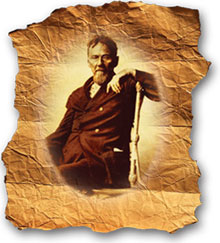
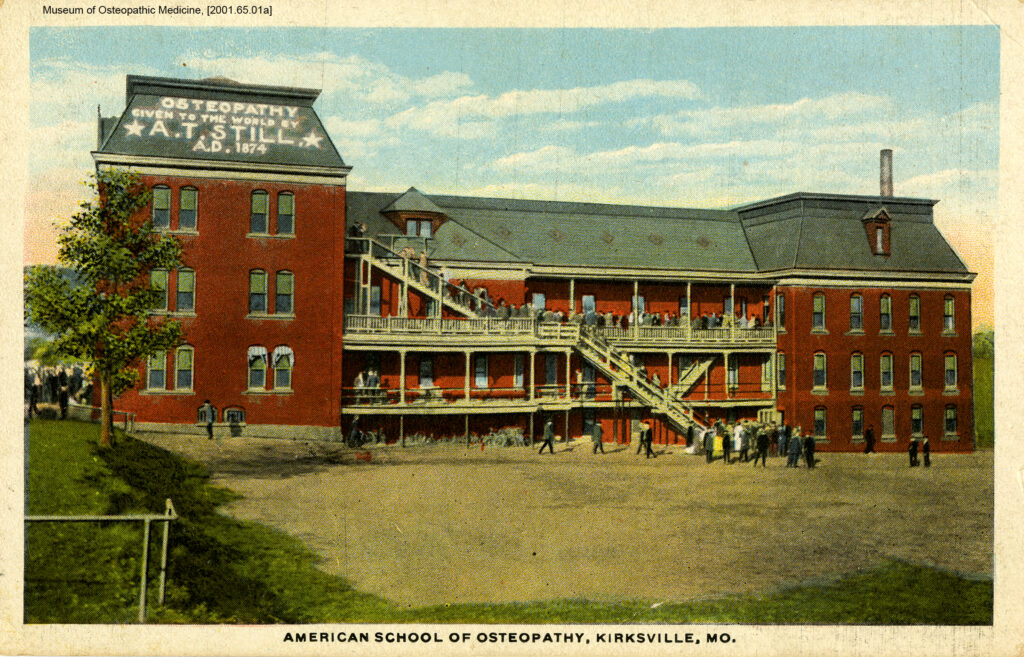
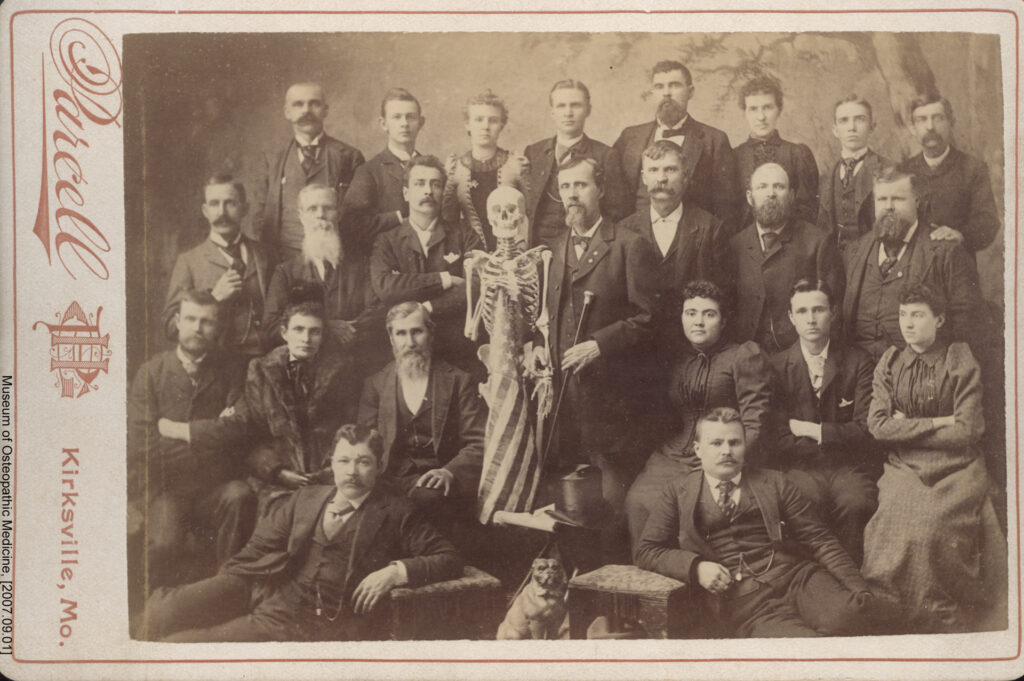
Dr. Andrew Taylor Still was born in Jonesboro (now called Jonesville), Lee County, Virginia on August 6, 1828. After moving to Kansas in 1853, Andrew Taylor Still decided to become a physician. He was aged 25, a married man with two small children. His father, Abram Still, a circuit-riding Methodist minister, had also been a physician for the best part of his life and so Andrew Taylor Still became his father’s apprentice.
It was common practice in those days for a would-be-doctor to train simply by working with a practicing physician and studying medical books, but it is thought by some that Dr. A.T. Still also received some formal medical training at a school in Kansas City; however, no records remain to confirm this training. As an apprentice, young Andrew Taylor Still learned the medical treatment techniques of the time: bleeding, blistering, and purging – and was taught the use of compounds such as mercury, arsenic, heavy metals, as well as some natural elements such as simple herbs and tree bark.
In 1861, the Civil War in the United States began. Andrew Taylor Still enlisted on the side of the North and served using his medical and leadership skills in the union army. These were distressing circumstances certainly, but they were circumstances that immersed Dr A.T. Still in an environment that further expanded his medical experience.
Dr. A.T. Still remained immersed in this environment for four years until he received the news that his regiment could disband and go home. Upon his return home, Dr. A.T. Still was faced with an even greater trauma. Within a short period of time, three of his sons died of what we now know to be spinal meningitis, his daughter died of pneumonia, and his wife died giving birth.
Distraught that his medicine had been unable to save his family, and coupled with his grim experiences in the Civil War; Dr. A.T. Still rejected most of what he had learned about medicine and began to search for a new method of healthcare to improve the medicine of his day.
There were a number of alternative medical theories in circulation at this time – magnetic healing, bone-setting, Grahamism, hydrotherapy and homeopathy. There is evidence to believe that in his searching for a new way of healing, Dr. Still investigated several of these systems adopting, whether consciously or subconsciously, those components which seemed to him to have validity.
Dr. Still established an approach to medicine based on ideas that date back to Hippocrates, such as building on a foundation of natural medicine and the “vis medicatrix naturae” (the healing power of nature). Dr. Still’s main principle was that structure and function are interdependent on each other; that is to say, the shape of something affects how it works and vice versa. He also recognized the body’s ability to heal itself and that a key to health resides in the correction of the anatomical deviations that interfere with nervous system actions and the free, unimpeded flow of blood and other fluids in the body. He promoted the idea of preventative medicine and endorsed the philosophy that physicians should focus on treating the patient rather than the disease.